Congratulations.
You built a portfolio.
You selected the weights.
You checked diversification, correlation, position size and modeled risk.
Then the market did something deeply inconsiderate:
it moved.
One position rallied.
Another fell.
Bonds wandered off.
Cash accumulated.
Your beautifully arranged allocation now looks like someone shook the spreadsheet.
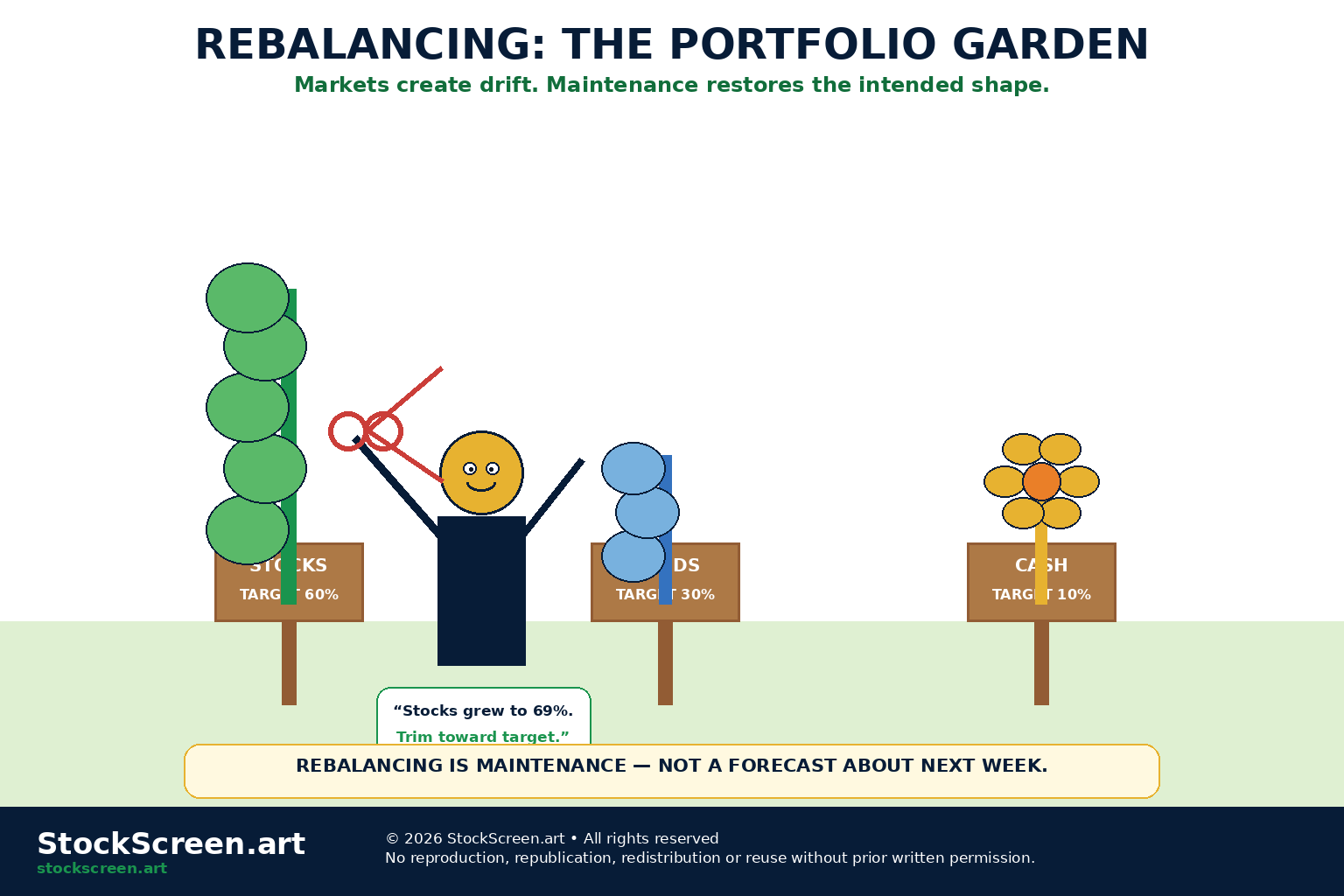
1. Why portfolio weights drift
Portfolio weights change whenever holdings earn different returns.
Suppose a fictional portfolio begins:
- 60% stocks;
- 40% bonds.
If stocks rise strongly while bonds barely move, the portfolio might later become:
- 68% stocks;
- 32% bonds.
No allocation decision was made.
The market made one on your behalf.
2. What rebalancing means
Rebalancing means adjusting holdings to bring the portfolio back toward an intended allocation.
Investor.gov describes rebalancing as bringing a portfolio back to its original asset-allocation mix after market movements cause holdings to drift.
In our fictional 68/32 portfolio, restoring a 60/40 target might involve:
- selling some stocks and buying bonds;
- directing new cash toward bonds;
- or using a combination of both.
3. Rebalancing is a risk-control action
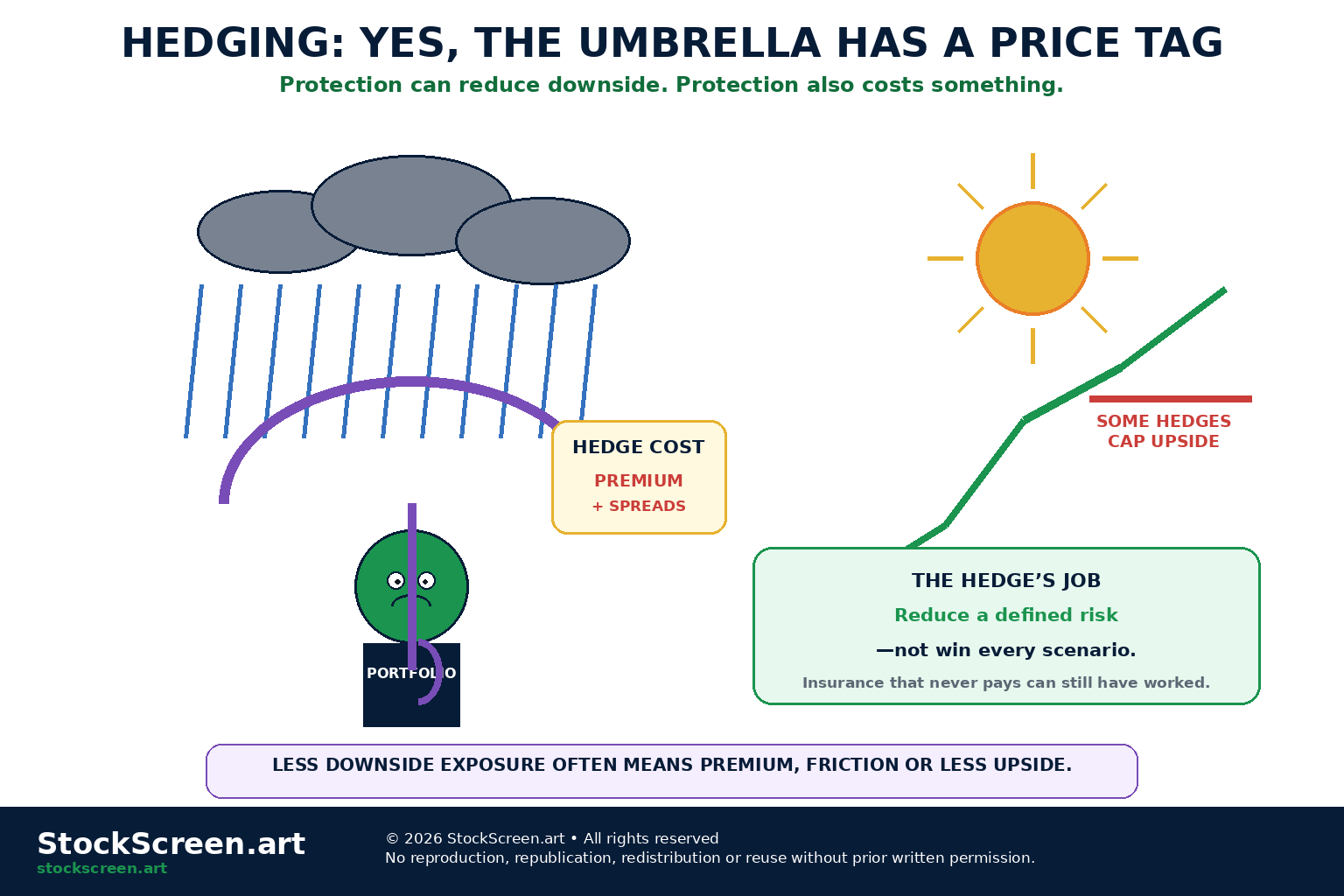
If the original target reflected the investor's intended risk level, drift can change that risk.
A portfolio that moves from 60% stocks to 75% stocks may now be more sensitive to equity-market declines.
Rebalancing can restore the intended exposure.
4. Rebalancing is not market timing
Rebalancing can result in selling something that rose and buying something that lagged.
That can look like a forecast.
But the logic is different.
Market timing says:
“I expect this asset to fall, so I am reducing it.”
Rebalancing says:
“This asset is now larger than the risk allocation I intended.”
5. Rebalancing does not require hating the winner
Trimming a winning asset does not necessarily mean:
“I think this is now a bad investment.”
It can simply mean:
“I do not want one successful investment to control the portfolio.”
Sometimes discipline looks suspiciously like being rude to your favourite stock.
6. Strategic allocation versus current allocation
The strategic allocation is the intended long-run mix.
The current allocation is what the portfolio actually contains today.
Rebalancing compares the two.
7. Strategic allocation can change
The target itself is not sacred.
It may need review when:
- financial goals change;
- time horizon changes;
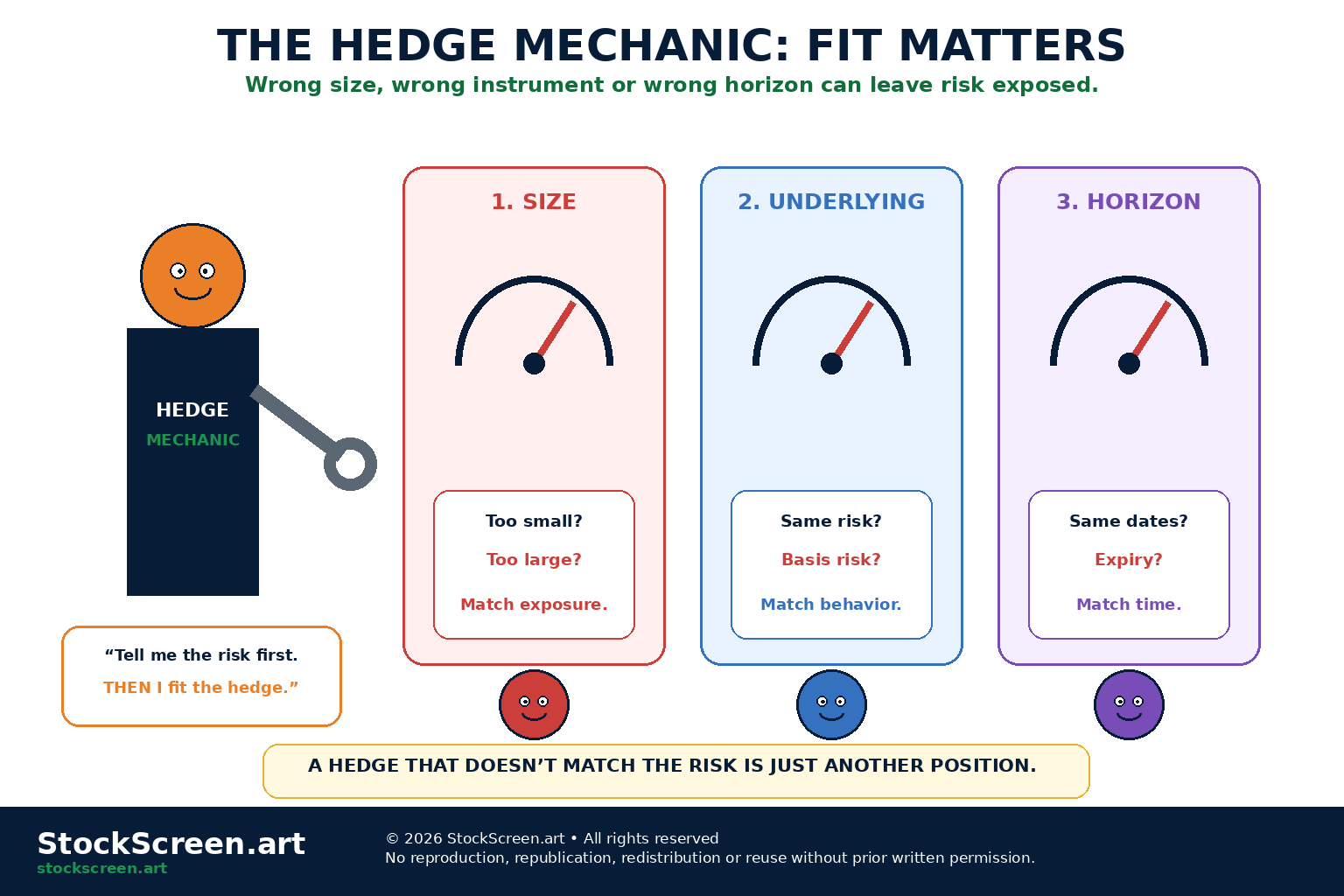
- income or liquidity needs change;
- risk capacity changes;
- major life circumstances change.
Rebalancing an obsolete plan with perfect precision is still obeying an obsolete plan.
8. Calendar-based rebalancing
A calendar-based approach reviews the portfolio on a schedule.
Examples might include:
- quarterly;
- semiannually;
- annually.
The interval is a policy choice, not a universal law.
9. Why calendar rules are attractive
Advantages include:
- simplicity;
- predictability;
- less temptation to react to daily noise;
- easy documentation.
The calendar cannot panic.
This is one of its better personality traits.
10. Calendar rules can ignore large drift
The drawback is that markets do not schedule volatility around your annual review.
A large move can push weights far from target long before the next calendar date.
Therefore some investors use threshold rules instead.
11. Threshold-based rebalancing
A threshold-based approach acts when an allocation moves beyond a predefined band.
Fictional example:
- target equity weight = 60%;
- review band = 55% to 65%.
If equities move outside the band, the portfolio is reviewed for rebalancing.
The numbers are examples, not recommendations.
12. Threshold rules react to actual drift
Threshold-based policies have a useful property:
They respond when portfolio risk has meaningfully moved, rather than merely because Tuesday became Wednesday.
But they require monitoring and can create more transactions in volatile markets.
13. Calendar-plus-threshold approaches
Some frameworks combine both ideas:
- review on a regular schedule;
- rebalance only if drift exceeds a defined tolerance.
This can reduce unnecessary trading while still imposing discipline.
14. Cash-flow rebalancing
New contributions, dividends, interest and withdrawals can be used to move the portfolio toward target without immediately selling existing holdings.
Example:
- stocks are overweight;
- bonds are underweight;
- new contribution arrives.
Directing new money toward bonds can reduce drift.
15. Why cash-flow rebalancing can be efficient
It can reduce:
- sales;
- transaction costs;
- tax realization in taxable accounts;
- administrative complexity.
Sometimes the gentlest portfolio correction is simply feeding the smaller plant.
16. Withdrawals can rebalance too
Investors taking money out of a portfolio can preferentially sell overweight assets.
The withdrawal becomes part of the maintenance process.
Portfolio management is often less about adding more trades and more about using trades already required.
17. Rebalancing can create taxes
Selling appreciated investments in a taxable account may create capital gains.
Tax treatment depends on jurisdiction, account type and individual circumstances.
Therefore the theoretically cleanest rebalance may not be the most efficient after taxes.
18. Account location can matter
Investors with multiple account types may have different tax consequences across accounts.
Rebalancing decisions can therefore involve:
- which asset to trade;
- which account to trade in;
- whether new cash can solve part of the drift.
This can become complex quickly.
Tax professionals remain employed for a reason.
19. Transaction costs matter
Rebalancing can incur:
- commissions;
- bid-ask spreads;
- market impact;
- taxes;
- administrative costs.
Rebalancing every microscopic drift can create more cost than benefit.
20. Liquidity matters
Large or illiquid positions may be difficult to resize efficiently.
A theoretical 2% trim can be practically expensive if:
- spreads are wide;
- volume is thin;
- the position itself is large relative to normal trading.
The target weight lives in a spreadsheet.
Execution lives in a market.
21. Rebalancing can impose a buy-low, sell-high discipline
Mechanically restoring target weights often means:
- trimming assets that rose relative to others;
- adding to assets that lagged relative to others.
This can look like systematic contrarian behavior.
But it does not guarantee the lagging asset will recover.
22. Rebalancing can hurt during strong trends
If one asset keeps outperforming, repeatedly trimming it can reduce participation in that trend.
A portfolio that never rebalances may outperform during a sustained one-way market.
It may also become increasingly concentrated.
Risk management frequently involves exchanging some possible upside for greater control.
23. Rebalancing is not automatically profitable
Rebalancing is primarily about maintaining the portfolio's intended risk structure.
It is not a trading system that guarantees excess return.
If someone sells rebalancing as:
“Free alpha because math!”
the math has requested better representation.
24. Rebalancing individual securities
The same principle can apply inside an equity portfolio.
Suppose one stock grows from 5% to 18%.
The investor may decide to:
- trim it toward a target weight;
- allow a wider band;
- change the target intentionally;
- do nothing after evaluating the concentration risk.
The framework identifies the decision.
It does not dictate one answer.
25. Rebalancing clusters, not just tickers
From PR-02, we know several holdings can share the same risk.
Rebalancing can therefore operate at:
- security level;
- sector level;
- asset-class level;
- factor level;
- geographic level.
Trimming one ticker does little if five cousins remain at the party.
26. What hedging means
Hedging means deliberately taking an offsetting position or exposure intended to reduce a specific risk.
The core structure is:
existing risk + offsetting exposure = reduced net sensitivity
The hedge may be partial or nearly complete.
27. Hedging is not diversification
Diversification spreads risk across different sources.
Hedging directly offsets some of an existing exposure.
Example:
- owning several sectors = diversification;
- buying a put against an equity position = hedge.
Cousins, not twins.
28. Hedging is not simply selling
The simplest way to eliminate an exposure is often to reduce or close it.
Hedging is useful when the investor wants to retain the underlying position while reducing a particular risk.
That might be because of:
- tax considerations;
- temporary uncertainty;
- long-term ownership goals;
- operational exposure;
- the need to lock or limit a price risk.
29. Every hedge has a cost
The cost may be obvious:
- option premium;
- commissions;
- spreads;
- financing.
Or less obvious:
- capped upside;
- basis risk;
- margin requirements;
- opportunity cost.
30. Protective puts
One classic equity hedge is a protective put.
The structure combines:
- a long stock position;
- a long put option on that stock or closely related exposure.
The put gives the holder the right to sell at the strike price according to the option's terms.
31. What the protective put changes
If the stock falls sharply, the put can gain value and establish a floor on the combined position at expiration, subject to the strike, premium and contract terms.
If the stock rises, the investor can still participate in upside, but the put premium reduces the combined return.
Insurance has entered the spreadsheet.
32. Protective puts expire
Protection lasts only for the option's life.
If the investor wants continuing protection, the hedge may need to be renewed or rolled.
Repeated premiums can become a meaningful long-run cost.
33. Strike selection changes the hedge
A higher protective-put strike generally provides protection closer to the current stock price, all else equal, but may cost more.
A lower strike may cost less but leaves more downside before the protection becomes economically important.
Hedging is full of knobs.
None are labelled “FREE PERFECT PROTECTION.”
34. Protective collars
A collar commonly combines:
- long stock;
- long put;
- short call.
The call premium can help offset part of the put cost.
In exchange, upside can be limited above the call strike.
35. Collars illustrate the hedge trade-off
The investor exchanges some potential upside for downside protection.
This makes the trade-off visible:
less downside exposure ↔ less upside participation
Risk reduction is usually paid for somewhere.
36. Index hedges
An investor with a broad equity portfolio might use an index-based hedge.
This can be more practical than hedging every stock separately.
But the portfolio may not perfectly match the index.
That creates basis risk.
37. Basis risk
Basis risk is the risk that the hedge and the exposure being hedged do not move together closely enough.
Example:
- portfolio = small growth stocks;
- hedge = broad large-cap index.
Both may fall in a market decline, but not by the same amount.
The umbrella is close.
It is just two seats to the left.
38. Hedge ratio
A hedge ratio describes how much hedge exposure is used relative to the underlying exposure.
A full hedge attempts to offset most of the target risk.
A partial hedge deliberately leaves some exposure.
More hedge is not automatically better.
It depends on the objective and cost.
39. Over-hedging
If the hedge is larger than the underlying risk, the portfolio can flip direction.
Example:
- $100,000 equity exposure;
- hedge behaves like $140,000 of short equity exposure.
The investor is no longer merely protected.
They may now be net short.
Congratulations on accidentally changing careers.
40. Under-hedging
A hedge that is too small may reduce losses without offsetting as much risk as expected.
This is not necessarily wrong.
Partial hedges are often intentional.
The important point is to know the intended coverage.
41. Futures as hedging tools
Futures markets are widely used by commercial and institutional participants to manage price risk.
CFTC educational material describes hedgers as participants using futures to reduce the risk of financial losses from price changes.
Examples include:
- producers hedging selling prices;
- consumers hedging input costs;
- portfolio managers hedging broad index exposure;
- businesses managing currency or interest-rate risk.
42. Producer hedge example
A producer worried that the price of a commodity may fall before sale can use a short futures position to offset some of that price risk.
If the cash commodity falls, gains on the short futures position may partially offset the weaker selling price.
The exact result depends on the contract, timing and basis.
43. Consumer hedge example
A business worried that an input price may rise can use a long futures hedge.
If the commodity rises, gains on the futures may partially offset the higher physical purchase cost.
The hedge is protecting an economic exposure, not placing a random directional bet.
44. Futures hedges involve margin
Futures hedges can require margin and daily variation settlement.
A hedge can be economically successful over the full period while still creating short-term cash-flow demands.
Risk reduction and liquidity management must therefore be considered together.
45. Currency hedging
International investments can create exchange-rate exposure.
Suppose a Canadian investor owns a U.S. asset.
The investment return in Canadian dollars depends on:
- the U.S. asset's return;
- the USD/CAD currency movement.
A currency hedge can reduce part of the exchange-rate component.
46. Currency hedging changes the return source
Hedging the currency does not remove the underlying asset's market risk.
It attempts to reduce the contribution from exchange-rate changes.
You still own the roller coaster.
You have merely asked one passenger to stop shaking the cart.
47. Currency hedges can also be imperfect
Hedge effectiveness can be affected by:
- changing portfolio value;
- contract size;
- roll timing;
- interest-rate differentials;
- transaction costs.
A hedge sized correctly today may need adjustment later.
48. Interest-rate hedging
Banks, corporations and institutional investors may hedge interest-rate exposure using instruments such as futures, swaps or options.
The broad logic is the same:
identify the sensitivity → add an offsetting sensitivity
The implementation can become highly technical.
Foundation Path is staying safely on the sidewalk.
49. Hedging can reduce expected return
A hedge designed to perform well when the portfolio performs poorly may lose money or cost premium during normal or rising markets.
This is not necessarily hedge failure.
Home insurance is not considered defective because the kitchen remained unexploded.
50. Evaluate the hedge relative to its job
A hedge should be judged by questions such as:
- Did it reduce the intended risk?
- How much did it cost?
- Was the size appropriate?
- Did basis risk behave as expected?
- Did it create liquidity or margin problems?
- Did it materially change upside participation?
“Did the hedge make money?” is often the wrong first question.
51. Hedge timing is difficult
Hedging only after volatility explodes can be expensive.
Option premiums may rise when demand for protection increases.
Hedging continuously can also be expensive.
The investor faces a familiar risk-management trade-off:
pay for protection often, or risk needing it when it is costly
52. Temporary hedge versus permanent allocation change
Suppose an investor becomes concerned about near-term event risk.
They might:
- temporarily hedge;
- reduce the position permanently;
- change the strategic allocation;
- do nothing.
These are different decisions.
A temporary concern should not automatically rewrite a long-term plan.
53. Rebalancing versus hedging
| Question | Rebalancing | Hedging |
|---|---|---|
| Main job | Restore intended weights | Offset a defined risk |
| Typical trigger | Portfolio drift | Exposure requiring protection |
| Requires derivative? | No | Not always, but often uses derivatives |
| Can reduce upside? | Indirectly, by trimming winners | Yes, depending on hedge structure |
| Cost | Trading, taxes, spreads | Premium, spreads, financing, margin, lost upside |
54. Sometimes reducing the position is the cleanest hedge
Investors occasionally build complicated derivatives around a position they simply own too much of.
Before constructing a hedge, ask:
“Would reducing the underlying exposure solve the problem more simply?”
Complexity should earn its lunch.
55. Hedge what you actually own
A hedge should correspond to the real risk.
Common mistakes include:
- wrong underlying;
- wrong quantity;
- wrong duration;
- wrong option strike;
- wrong futures contract;
- ignoring changing portfolio value.
56. A practical rebalancing workflow
- Confirm the target allocation still makes sense.
- Measure current weights.
- Measure drift from target.
- Check concentration and correlated clusters.
- Review taxes and transaction costs.
- Use contributions or withdrawals where practical.
- Trade only what is needed to restore the chosen policy.
- Document the new weights.
57. A practical hedging workflow
- Name the exact risk.
- Measure the exposure.
- Choose the hedge instrument.
- Estimate the hedge ratio.
- Define the protection horizon.
- Estimate premium, spread, financing and margin costs.
- Identify basis and liquidity risk.
- Define when the hedge will be removed, rolled or resized.
- Evaluate the hedge relative to risk reduction, not only P&L.
58. Eight terrible rebalancing ideas
- “Rebalance every day because precision.”
- “Never rebalance because winners deserve unlimited square footage.”
- “My target allocation was correct ten years ago, therefore it is immortal.”
- “Taxes are merely a rumour.”
- “The portfolio moved 0.2%, deploy the emergency rebalance team.”
- “I will rebalance only when I feel emotionally calm.”
- “Every lagging asset must be bought because rebalancing.”
- “If the plan says 60/40, context is illegal.”
59. Eight terrible hedging ideas
- “The hedge is free because the premium looked small.”
- “I hedged $200,000 of stock with $50,000 of unrelated index exposure. Close enough.”
- “The hedge lost money, therefore it failed.”
- “I bought protection after the panic began, and apparently protection got expensive. Rude.”
- “This hedge expires tomorrow, but my risk lasts six months.”
- “The futures contract has margin, so the notional size is probably tiny.”
- “I sold enough calls to pay for the puts and accidentally capped all the upside.”
- “I do not know the risk, but I definitely know I need a hedge.”
60. Ten mental models worth keeping
- Markets create drift automatically.
- Rebalancing restores intended risk weights.
- The target itself must still make sense.
- Cash flows can rebalance without unnecessary selling.
- Taxes, spreads and liquidity belong in the decision.
- Hedging means offsetting a defined risk.
- Every hedge has a cost or trade-off.
- Basis risk means the hedge and exposure can behave differently.
- Hedge size and horizon must fit the underlying risk.
- Risk maintenance is a process, not a one-time portfolio ceremony.
Quick knowledge check
Ten questions. No hedge is required against wrong answers; the downside is already defined.
1. What causes portfolio weights to drift?
Different holdings earn different returns, so their market values and percentages of the total portfolio change through time.
2. What is rebalancing?
Adjusting holdings to move a portfolio back toward its intended allocation or risk structure.
3. Is rebalancing the same as market timing?
No. Rebalancing primarily restores intended weights, while market timing changes exposure based on a forecast about future market direction.
4. What is one advantage of cash-flow rebalancing?
New contributions or withdrawals can move the portfolio toward target while reducing the need to sell existing positions, potentially lowering trading and tax costs.
5. What is hedging?
Taking an offsetting position or exposure intended to reduce a specific existing risk.
6. What does a protective put do?
It adds a long put to a long stock position, creating downside protection according to the put's strike, expiration and premium cost.
7. What is basis risk?
The risk that the hedge and the exposure being hedged do not move closely enough together for the hedge to offset losses as expected.
8. Why might a collar reduce upside?
Because the strategy typically includes a short call, which can cap gains above the call strike in exchange for helping finance downside protection.
9. Why can a futures hedge create a cash-flow problem even if it is economically useful?
Futures are margined and marked to market, so adverse moves in the futures leg can require cash before the offsetting economic exposure is realized.
10. What is the most important question before adding a hedge?
What exact risk am I trying to reduce, and how closely will the proposed hedge match that risk in size, behavior and time horizon?
Where we go next
That completes the Portfolio & Risk module.
We now know how investments interact inside a portfolio.
Next we widen the camera.
Because portfolios do not exist in a vacuum.
They exist inside economies that accelerate, slow down, inflate, tighten, panic, recover and occasionally read a central-bank press release seventeen times looking for one changed adjective.
Next:
FND-RW-01 — Economic Cycles and Market Regimes.
This begins the Markets in the Real World module.
Primary sources & further reading
- Investor.gov — Beginner's Guide to Asset Allocation, Diversification and Rebalancing
- Investor.gov — Asset Allocation and Diversification
- FINRA — Asset Allocation and Diversification
- Options Industry Council — Protective Put
- Options Industry Council — Protective Collar
- CFTC — Basics of Futures Trading
- CFTC — Economic Purpose of Futures Markets