AlphaEngine Scan Summary
Use the course navigation below to continue through the curriculum or jump to closely related lessons.
Why Technical Indicators Matter
Investors are surrounded by information. Earnings reports, analyst opinions, economic data, news headlines and social media can all influence stock prices. Technical analysis helps cut through that noise by focusing on what the market is actually doing.
Technical indicators allow investors to identify trends, evaluate momentum, measure risk and determine whether a stock may be entering a favorable or unfavorable phase. No indicator can predict the future, but indicators can help investors create a more structured research process.
Investors can apply these concepts using the MarketEngine™ stock analysis tool or by starting with the free U.S. stock screener. For a broader explanation of how technical, quantitative and machine-learning methods can fit together, see our AI stock analysis guide.
What Are the Best Technical Indicators for Stocks?
For most stock-analysis workflows, the most useful technical indicators are moving averages for trend, RSI and MACD for momentum, volume for confirmation, relative strength for comparison with the broader market, and Average True Range for volatility and risk planning. None is universally “best” on its own; their value comes from answering different questions about the same setup.
No single indicator should be treated as a complete signal. Technical analysis becomes more useful when several independent indicators support the same general conclusion.
- Moving averages: help identify short-, medium- and long-term trend direction.
- RSI: measures momentum and can highlight unusually stretched conditions.
- MACD: helps identify changes in momentum and possible trend confirmation.
- Volume: helps confirm whether an important price move has broad participation.
- Relative strength: shows whether a stock is outperforming or lagging the broader market. See our relative strength lesson for a deeper explanation.
- Average True Range: measures recent price volatility and helps place entries, targets and stop-loss levels in context.
| Indicator | Primary Question | Common Use | Main Limitation |
|---|---|---|---|
| Moving averages | What is the trend? | Compare price with the 20-, 50- and 200-day averages. | They lag because they use past prices. |
| RSI | Is momentum stretched? | Evaluate momentum on a 0-to-100 scale. | Overbought does not automatically mean sell. |
| MACD | Is momentum changing? | Look for improving or weakening momentum and confirmation. | Sideways markets can produce false crossovers. |
| Volume | Does the move have participation? | Confirm breakouts and important price moves. | Volume needs comparison with its normal range. |
| Relative strength | Is the stock outperforming? | Compare performance with the market or a peer group. | Outperformance alone does not define a complete setup. |
| ATR | How volatile is the stock? | Place price movement, targets and stops in context. | ATR measures volatility, not direction. |
1. Identifying the Trend with Moving Averages
Moving averages help investors determine whether a stock is in an uptrend, downtrend or sideways market. The most common moving averages are the 20-day, 50-day and 200-day moving averages.
A stock trading above its 200-day moving average is generally considered to be in a stronger long-term technical position than a stock trading below it. When shorter-term moving averages are also above longer-term moving averages, the trend structure may be even stronger.
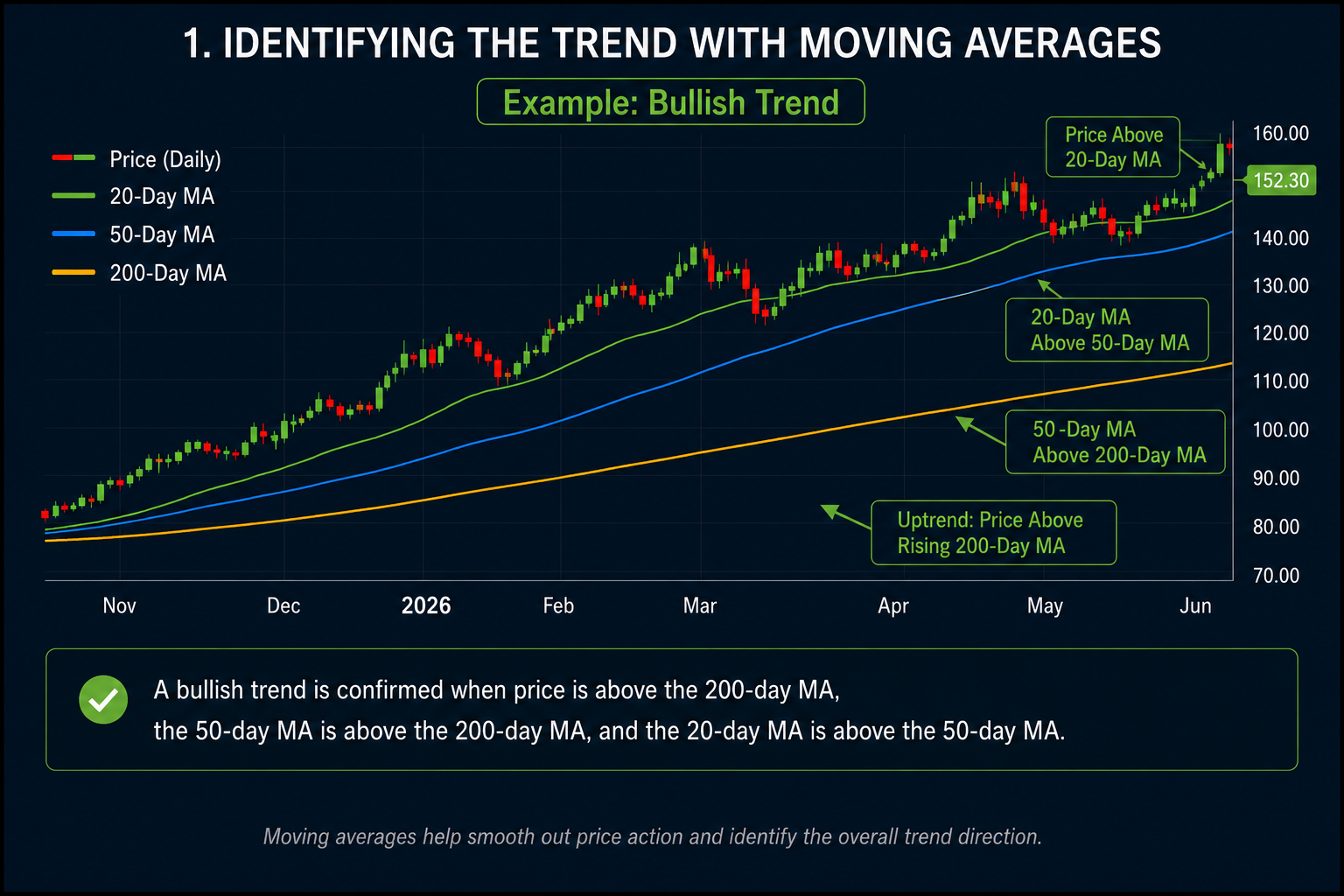
Figure 1: A bullish trend is often confirmed when price remains above the 200-day moving average, the 50-day moving average remains above the 200-day moving average, and the 20-day moving average remains above the 50-day moving average.
What investors often look for
- Price above the 200-day moving average
- A rising 200-day moving average
- 20-day moving average above the 50-day moving average
- 50-day moving average above the 200-day moving average
2. Measuring Momentum with RSI
The Relative Strength Index, or RSI, measures momentum on a scale from 0 to 100. It helps investors evaluate whether a stock may be gaining strength, losing strength or becoming overextended.
Common RSI interpretation:
- RSI below 30 may indicate oversold conditions
- RSI between 30 and 70 is often considered neutral
- RSI above 70 may indicate overbought conditions
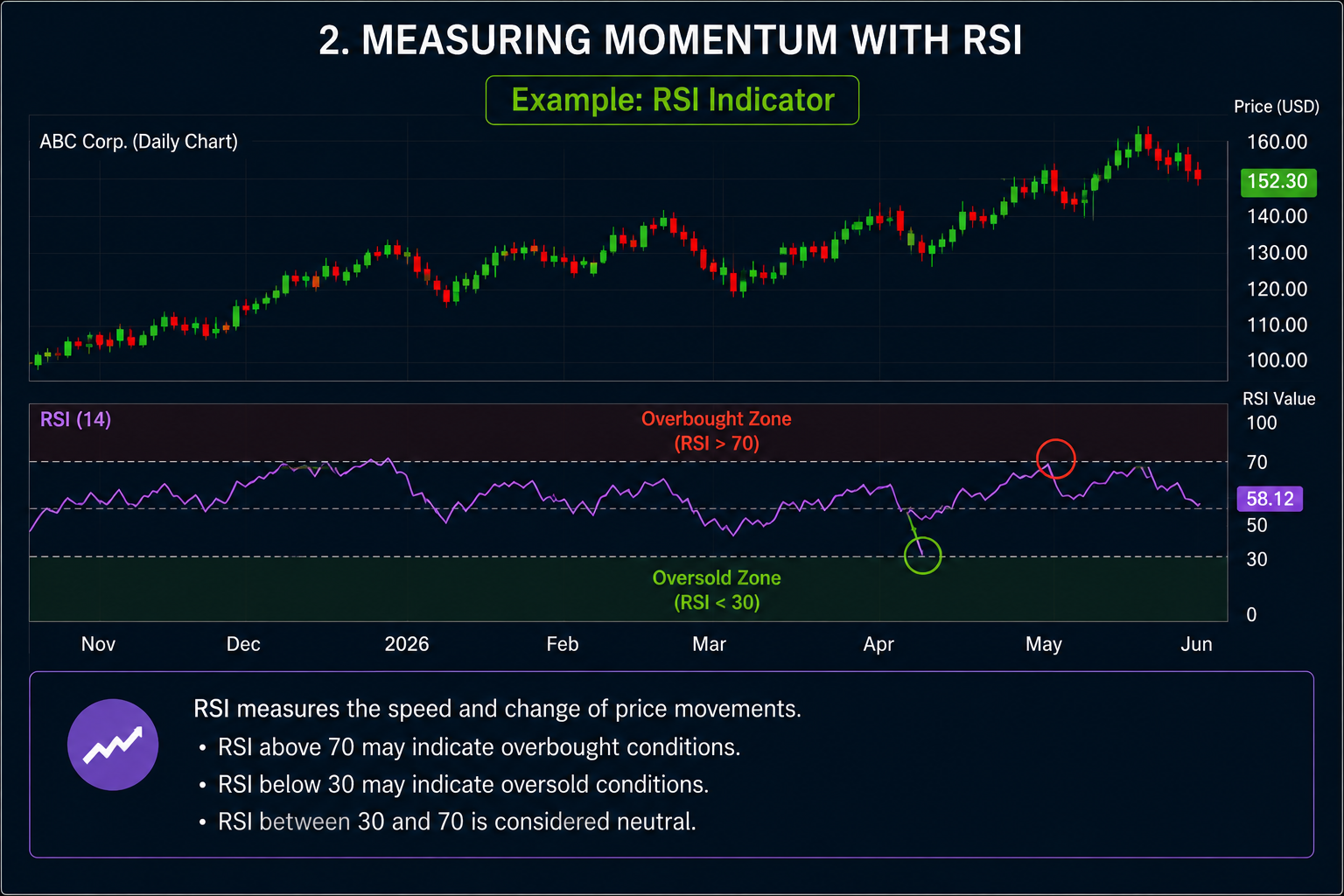
Figure 2: RSI helps investors identify periods where price momentum may be stretched. Readings above 70 can indicate strong buying pressure, while readings below 30 may indicate excessive selling pressure.
RSI should not be used by itself. Strong stocks can remain elevated for extended periods, and weak stocks can stay weak longer than expected. RSI is most useful when combined with trend, momentum and risk analysis.
3. Using MACD to Spot Momentum Shifts
The Moving Average Convergence Divergence indicator, commonly called MACD, helps investors evaluate changes in momentum. MACD is often used to identify whether momentum is improving or weakening.
A bullish MACD crossover occurs when the MACD line crosses above the signal line. This can suggest that momentum is improving, especially when it occurs while the stock is already in a positive trend.
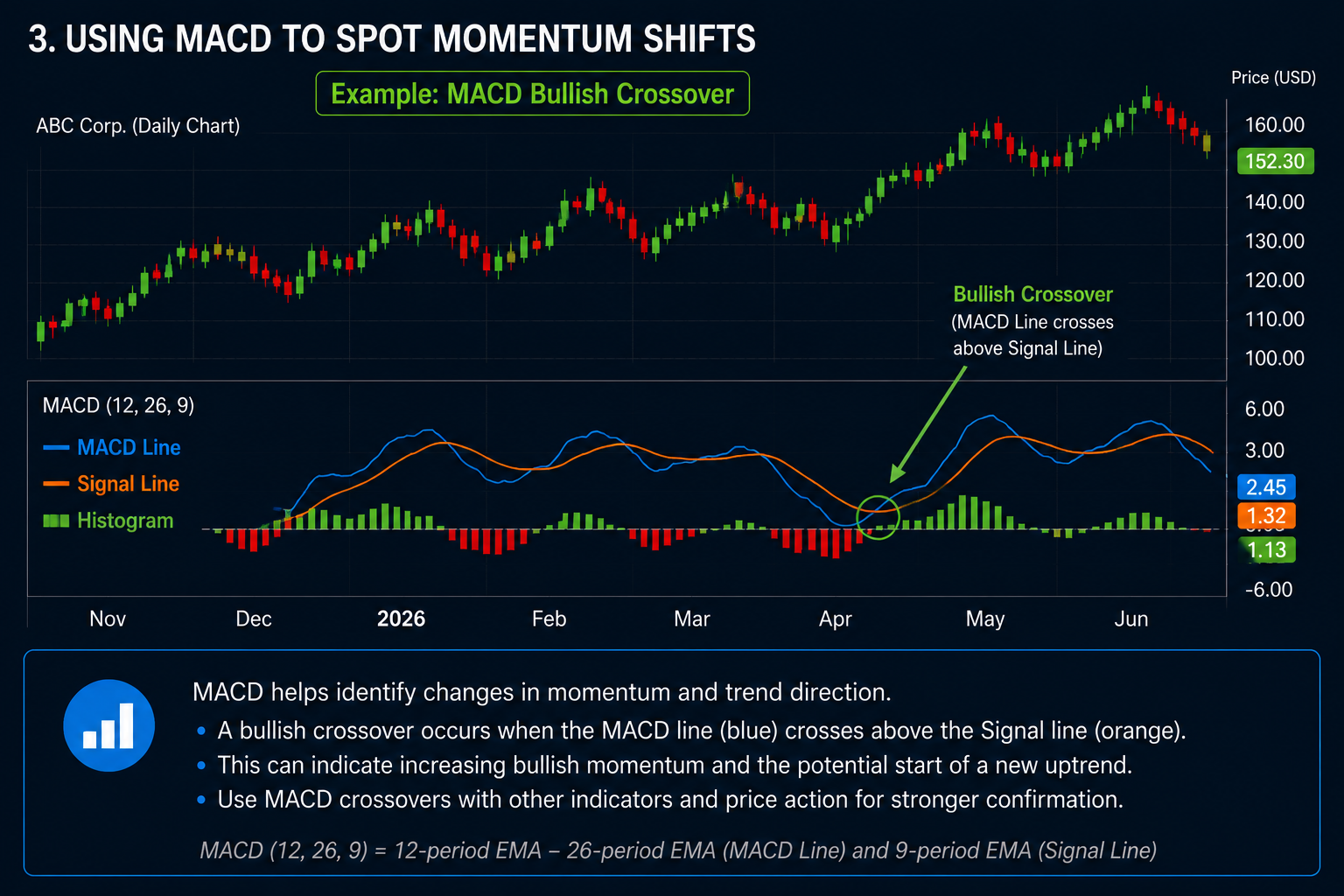
Figure 3: A bullish MACD crossover can indicate strengthening momentum and may signal the beginning of a new trend. MACD is often used as confirmation rather than as a standalone signal.
What makes MACD useful
- It helps identify momentum shifts
- It can confirm trend changes
- It works well alongside moving averages and RSI
4. Confirming Breakouts with Volume
Volume measures participation in the market. A breakout supported by strong volume is generally considered more meaningful than a breakout occurring on weak volume.
When a stock moves above resistance with significantly higher trading volume, it may indicate that more investors are participating in the move. Low-volume breakouts can be more vulnerable to reversal. The Foundation lesson on volume, breakouts and confirmation examines the role of participation and confirmation in more detail.

Figure 4: Breakouts accompanied by increased trading volume often have a higher probability of success than breakouts occurring on low volume.
Why volume matters
- Higher volume suggests stronger investor participation
- Volume can confirm price strength
- Weak volume can signal a possible false breakout
5. Combining Indicators
One of the biggest mistakes investors make is relying on a single indicator. RSI alone is not enough. MACD alone is not enough. A moving average crossover alone is not enough.
A stronger technical setup may include:
- Price above the 200-day moving average
- RSI in a healthy momentum range
- Bullish MACD confirmation
- Positive relative strength
- Increasing volume during upward price movement
- Clear entry, target and stop-loss levels
The more independent indicators that support the same conclusion, the stronger the technical case may become.
How to Select Stocks Using Technical Analysis
A practical way to select stocks using technical analysis is to work from broad confirmation toward a specific setup. Instead of searching for one perfect indicator, investors can use a sequence of checks to filter out weaker or conflicting candidates. The Foundation lesson on how stock screening works explains the broader filtering process that turns a large universe into a manageable research list.
- Start with trend: look for constructive price structure, such as price above important moving averages and a supportive longer-term trend.
- Check momentum: use RSI and MACD to see whether strength is improving, weakening or becoming stretched.
- Confirm participation: look for volume that supports breakouts, advances or other important price moves.
- Compare relative strength: favor stocks that are holding up better than the broader market or their peers when other conditions are similar.
- Define risk and reward: establish a reasonable entry area, target and stop-loss level before deciding whether the opportunity deserves further research.
This process does not guarantee a successful investment. Its purpose is to make stock selection more consistent by requiring several forms of technical evidence to support the same conclusion before capital is put at risk.
6. Measuring Volatility with Average True Range
Average True Range, usually shortened to ATR, measures how much a stock has recently moved during a typical trading period. ATR does not say whether price is likely to rise or fall. It describes the size of recent price movement, which makes it useful for comparing volatility and planning risk.
A two-dollar daily range means something very different for a twenty-dollar stock than for a two-hundred-dollar stock, so investors often consider ATR as a percentage of price. A wider ATR may require more room between an entry and a stop-loss level, while a narrower ATR may indicate a less volatile setup. ATR-based levels should still be checked against support, resistance, liquidity and the investor’s risk tolerance.
What ATR can help investors evaluate
- Whether recent volatility is unusually high or low
- How normal price movement compares across stocks with different prices
- Whether a proposed stop-loss is so close that ordinary volatility could trigger it
- Whether a target offers enough potential reward relative to the planned downside
7. Risk Management Still Matters
Technical indicators can help identify potential opportunities, but risk management determines whether an idea is practical. Investors should understand the possible downside before focusing on upside. The Foundation lesson on risk/reward and position planning goes deeper into entries, targets, invalidation levels and planned downside.
Common risk tools include:
- Entry level: the price area where the setup is being evaluated.
- Target price: a possible upside level based on the current setup.
- Stop-loss level: a downside level used to manage risk if the setup fails.
- Risk/reward ratio: the relationship between potential upside and potential downside.
How StockScreen.art Helps Investors Analyze Stocks
StockScreen.art combines multiple technical indicators into a structured research framework designed to help investors identify potential opportunities more efficiently. Instead of manually calculating every signal, users can enter a ticker and review trend signals, momentum indicators, recommendations, target prices and stop-loss levels in one place.
To research a stock, use MarketEngine™ stock analysis. To understand the broader role of AI in stock research, read the AI stock analysis guide. To discover potential stock ideas, start with the free stock screener. For weekly ranked research candidates, explore AlphaEngine™ quantitative stock rankings.
Technical Indicator Questions
What are the best technical indicators for stocks?
Moving averages, RSI, MACD, volume and relative strength are among the most useful because they measure different parts of a setup: trend, momentum, participation and comparative performance. They are generally more useful in combination than as standalone signals.
Which technical indicator is best for beginners?
Moving averages are often a practical starting point because they make trend direction easier to see. RSI and MACD can then add momentum context, while volume and relative strength help confirm whether a move has broader support.
Should technical indicators be used by themselves?
No single technical indicator is reliable enough to describe an entire investment setup. A stronger process combines trend, momentum, participation, relative strength and risk/reward, while also recognizing that no indicator can guarantee future performance.
Can I screen stocks using technical indicators?
Yes. A stock screener can use technical conditions to reduce a broad market to a smaller research list. Start with the StockScreen.art free U.S. stock screener to compare current opportunities, then open an individual ticker in MarketEngine™ when you want to examine its indicators and risk/reward in greater detail.
Final Thoughts
Technical indicators are not crystal balls. No indicator can predict future market performance with certainty. However, technical analysis can provide a structured framework for evaluating stocks and identifying opportunities that deserve further research.
By combining trend analysis, momentum indicators, volume confirmation and disciplined risk management, investors can make more informed decisions and avoid relying solely on emotion or headlines.
Disclaimer: StockScreen.art provides educational research tools only and does not provide financial advice. Always conduct your own due diligence before making investment decisions.
Copyright notice: © StockScreen.art. All rights reserved. Reproduction, republication, redistribution or reuse of this article is not permitted without prior written permission from StockScreen.art.